


Behind the slides and lazy afternoons at Waterbom Bali sits a decade-long effort to run a waterpark more responsibly. We look at its Karmic Returns programme, the progress so far and the road to Net Zero by 2033.
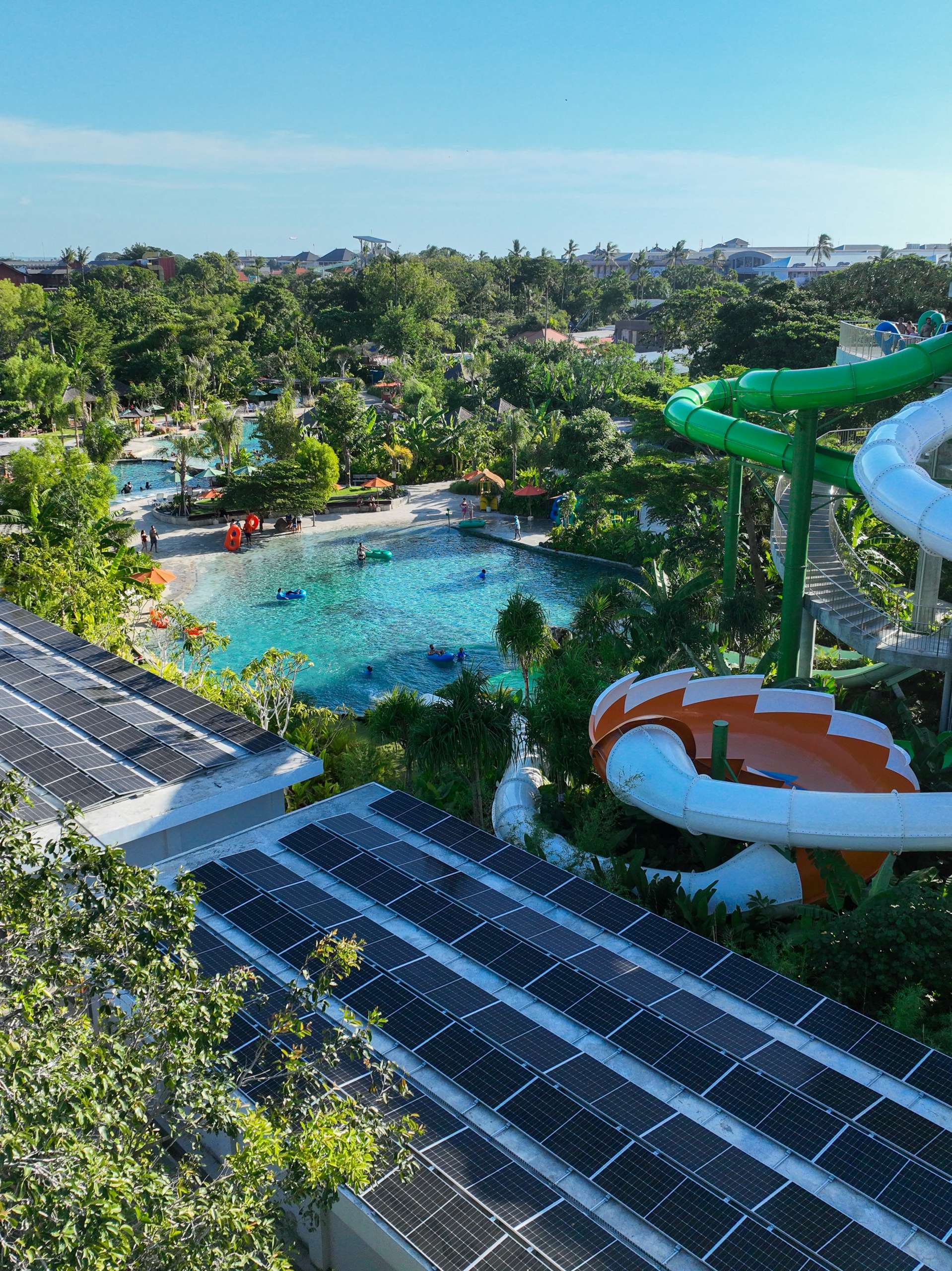
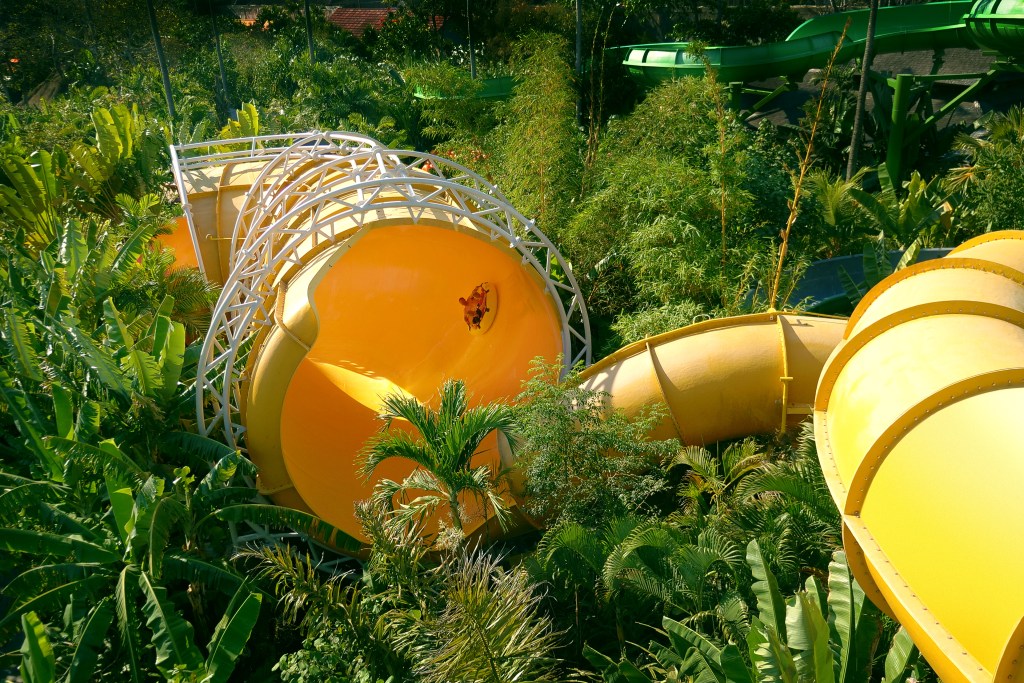
Stand at the top of a slide tower at Waterbom Bali and look down. Between the curves of the slides and the blue of the pools, much of what you see is green. More than half of the park’s 5.1 hectares is planted as botanical gardens, a pocket of shade and foliage set among the hotels, shops and traffic of Kuta. They are also the first clue to the role sustainability plays at Waterbom Bali.
At ground level, the day finds its own rhythm. There is the Lazy River for drifting, private gazebos for retreating with family and friends, and two swim-up bars for a tropical cocktail between rides. Four dining outlets cook fresh every day with locally sourced ingredients. This is, first of all, a place to play.
Yet the gardens hint at something more. For a business built on water, Waterbom has spent the past decade asking how a waterpark might take less from the island it depends on, and give more back.
Sustainability at Waterbom Bali: a decade of Karmic Returns
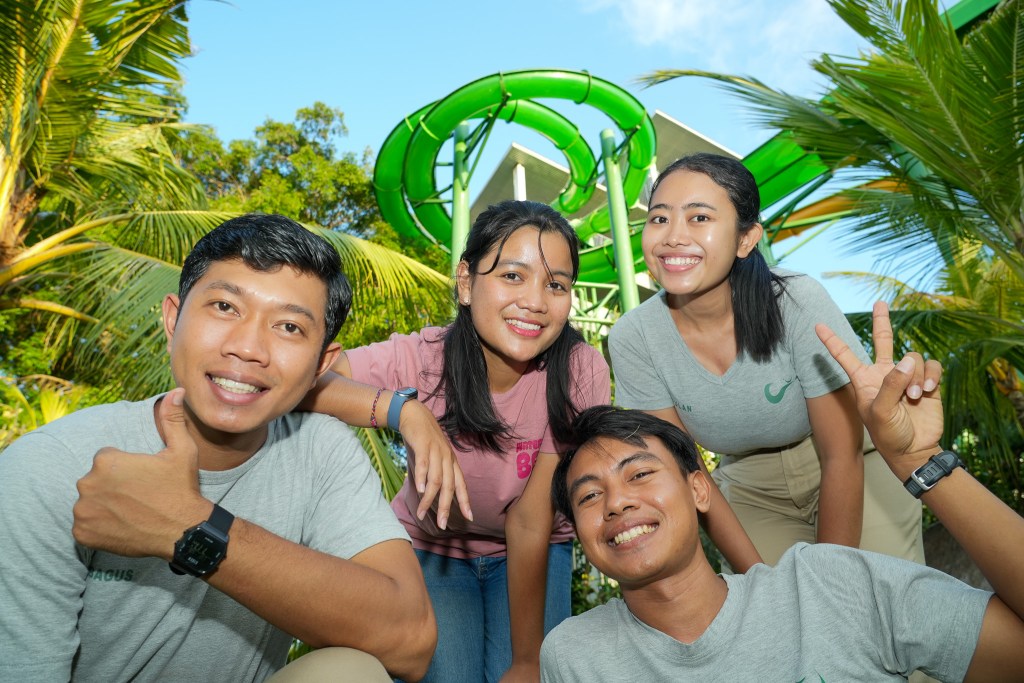
That question became Karmic Returns, the sustainability programme at Waterbom Bali. It was set up in 2016 under Sayan Gulino, then general manager and CEO from the following year, with sustainability consultant Eco-Mantra. The name reflects a simple belief: what we do today shapes the world of tomorrow. The park speaks of a journey towards becoming the world’s most sustainable waterpark, an ambition rather than a claim.
The programme covers energy, water, waste, biodiversity and education, and is meant to guide everyday decisions rather than sit apart from them.
“For us, sustainability has never been about ticking boxes or making claims,” says Gulino. “It’s about continuously questioning how we do things, where we can do better, and how we can operate in a way that respects the environment and the community around us.”
Water, used twice
In a waterpark, water is the obvious place to start. Waterbom treats its own wastewater in an on-site sewage treatment plant and uses it to irrigate the botanical gardens. In 2025, around 18,800 cubic metres were reused this way, so the gardens guests wander through are partly watered by the park’s own recycled supply.
Everyday use is falling too. Last year the park used 193 litres of water per guest, comfortably within its own target of 220 litres.
From kitchen to garden
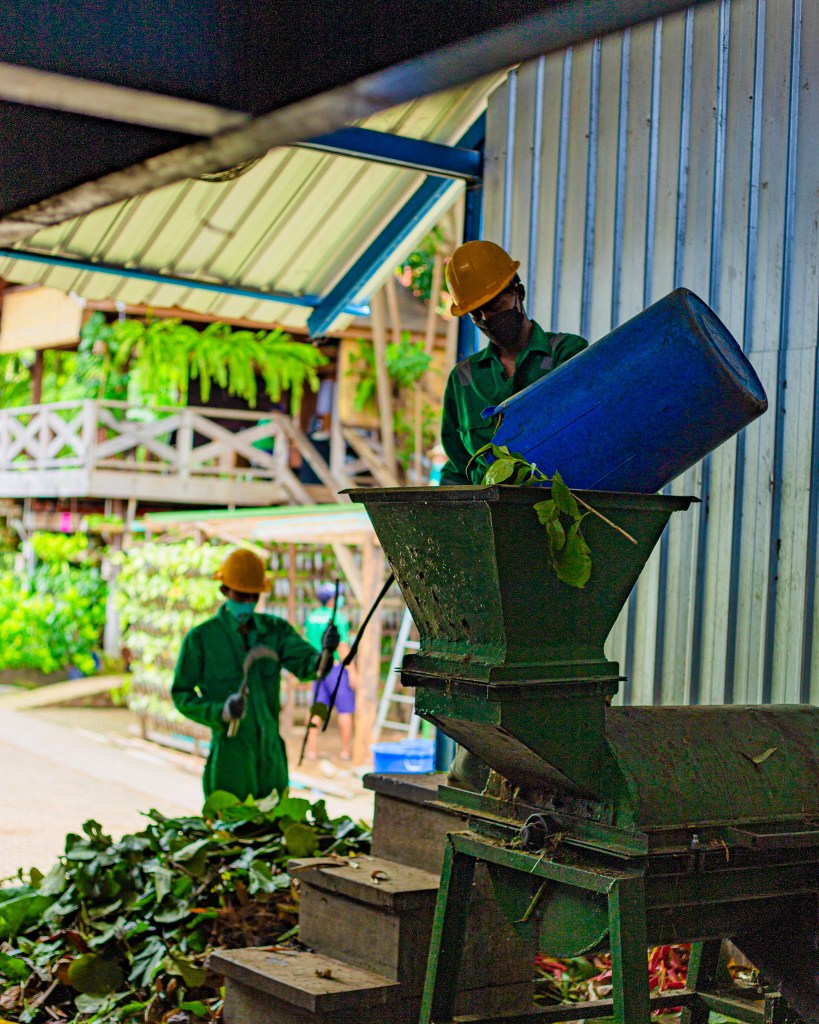
Much of the quiet work happens in the kitchens. Food waste is separated into bins as it is produced, with suitable scraps set aside for animal feed and the rest composted wherever possible. Fruit and other kitchen scraps are also turned into eco enzymes, a fermented liquid that is poured back onto the gardens. Across the park, three quarters of all waste is composted on site, most of the remainder goes to recycling partners, and in 2025 just 0.7 per cent was sent to landfill.
A system like this depends on people as much as infrastructure. Waste is sorted at source, which means operational teams, tenants and waste partners making the same small decisions many times a day.

Sunshine and a 2033 deadline
At the heart of it all is Net Zero by 2033. Waterbom aims to cut its greenhouse gas emissions by 90 percent against a 2019 baseline, covering not only the park itself but its wider value chain, before addressing what remains.
Since 2024, the park has run on 100 percent renewable electricity. Some of it is generated on site, by 686 solar panels on rooftops that include the lobby, the Wantilan Cafe and the offices. They supply around 8 percent of the park’s electricity, with the rest covered by Renewable Energy Certificates purchased through PLN, Indonesia’s state electricity company.
Gulino is candid about the distance still to travel. “We’ve made meaningful progress, but we know there’s still a lot of work ahead,” he says.
Lessons beside the slides
The park also doubles as a classroom. Through Seed of Thought, its education programme, students take part in sustainability workshops built around what they can see on site, and are encouraged to think about climate change and their own part in it. In 2025, 386 students took part. The sessions welcome local and international schools and universities, and can also be arranged for companies, NGOs, foundations and other groups.
Behind the programme sits Tri Hita Karana, the Balinese philosophy of harmony between people, nature and the spiritual world. On an island where tourism and its impact are part of daily conversation, it ties Waterbom’s work to values that belong to Bali itself.
The future of sustainability at Waterbom Bali
Sustainability at Waterbom Bali has also been recognised. Waterbom received the Grand Title Award for Sustainability and Social Responsibility at the 2023 Pacific Asia Travel Association (PATA) Gold Awards, and a PATA Gold Award for Best Climate Action Initiative (Industry) in 2025. In September, it was named Asia’s Leading Waterpark at the World Travel Awards for the third year running, with Chief Operating Officer David Garcia accepting the award in the Maldives on World Tourism Day.
The work is far from finished. Reaching Net Zero will mean deeper cuts across the value chain, more energy generated on site and steady progress on water and waste.
For guests, little about a day at Waterbom looks different. The slides, the pools and the gardens are all still there. What has changed is the thinking behind them.
“Ultimately, we want to demonstrate that a successful tourism business can be part of the solution, and that caring for our island home is fundamental to our long-term future,” says Gulino. The next seven years will show how far that thinking can go.
Plan your visit
- Location: in the heart of Kuta, with the slides rising from just over five hectares of landscaped gardens.
- Rides & Attractions: 28 slides for thrill seekers, the Lazy River for slower hours and a children’s area for younger guests.
- Eat Well: four places to eat, each cooking fresh every day with locally sourced ingredients. Between rides, two swim-up bars pour tropical cocktails, and private gazebos offer a shaded retreat.
- Going deeper: organised groups can arrange a Seed of Thought session for a closer look at sustainability at Waterbom Bali.
For more information, visit waterbom-bali.com.
